
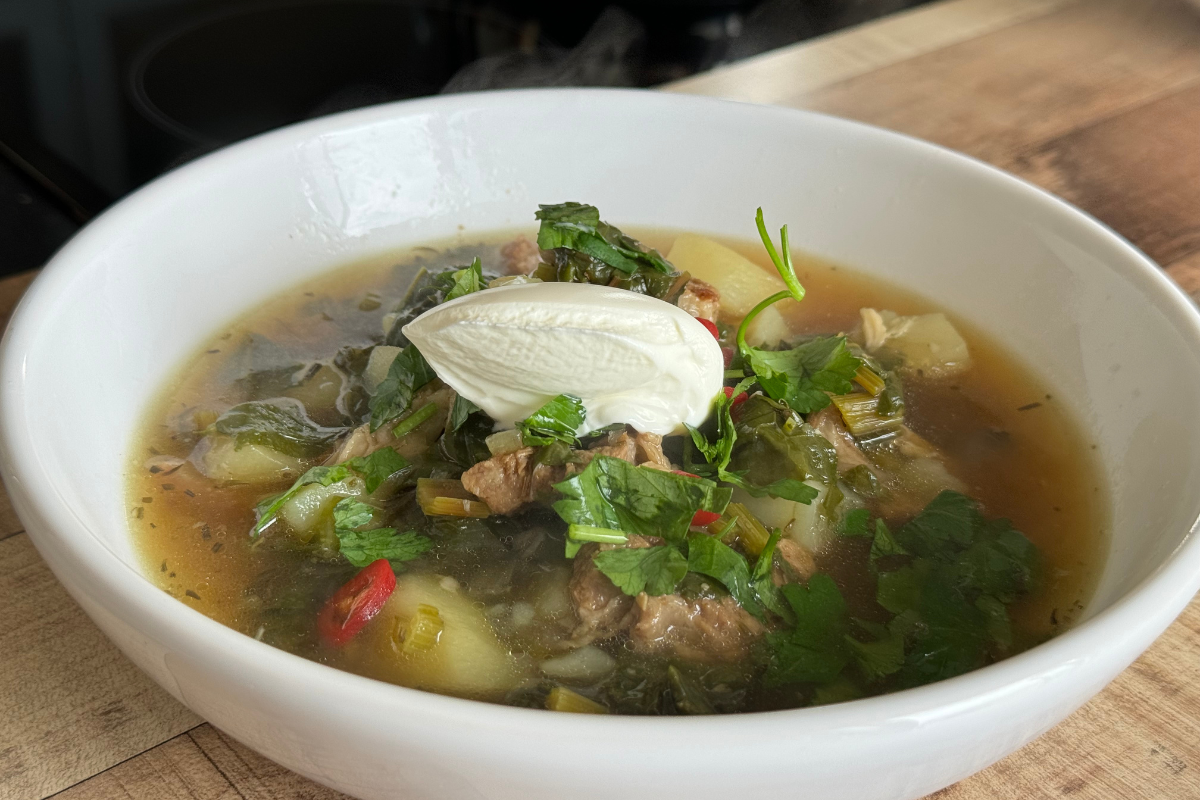
Whenever the beetroots were wilting in the gardens, and my grandmother and mother thinned them out to give the larger and stronger plants as much room as possible to grow a healthy root crop, they would make beetroot leaf soup from the small, uprooted beets with all the leaves. A piece of meat was thrown into the pot, which was then cut and eaten after it cooled down with bread and fresh onion leaves, another fresh potato, an onion, necessarily a bay leaf and black pepper. Even though it’s hot, beetroot leaf soup is still a summer soup.
Our lamps, elsewhere – swiss chard
In the past, beetroot soup could be enjoyed for several summer months, but now you can buy imported or undercover young beetroot with whole leaves or just cut leaves from spring. By the way, they are called beetroot leaves in English swiss chard. There are many recipes on the Internet swiss chard – beetroot leaves are prepared as a side dish, fried with garlic, flavored with lemon, there are also soups, with beans or lentils. I will be sure to share the recipe when I try it. It is no wonder that beetroot leaves are popular, they are rich in fiber, vitamins, minerals as well as antioxidants, so they are perfect for those who want to eat healthier.
Why should you eat beetroot leaves?
Beetroot leaves are rich in:
- Vitamins: A, C, K and folic acid, which are essential for skin, immunity and circulation.
- Minerals: potassium, magnesium and iron, which are important for heart health, bone strength and blood production.
- Antioxidants: Beetroot leaves are rich in flavonoids, which help fight inflammation and the effects of free radicals on the body.
- Fiber: which improve digestion and help maintain a healthy gut.
Beetroot soup recipe
Ingredients (2 l soup, for 4-6 servings)
- 200 g of fresh beetroot leaves (washed and chopped)
- 1-2 medium potatoes (cut into cubes)
- 1 carrot (sliced)
- 1 onion (chopped)
- 2 garlic cloves (chopped)
- 1.5 liters of meat or vegetable broth. It’s always tastier to make homemade, as I always have broth preparations to share here.
- 2 tablespoons of olive oil
- 1 bay leaf
- Salt and freshly ground pepper to taste
- 1 tablespoon of sour cream or thick yogurt to season each portion of soup
- Fresh herbs parsley or dill for serving
Preparation:
- Prepare the vegetables: Wash and chop the beetroot leaves, if using with small beets, wipe them clean; chop potatoes, carrots and onions. Chop the garlic.
- Fry the onion and garlic: Heat the olive oil in the soup pot and fry the onion and garlic until soft and fragrant (about 5-7 minutes).
- Add carrots: Add the carrots to the pot, mix well and fry for a few more minutes.
- Pour the broth and potatoes: Pour in the meat or vegetable stock, add the potatoes, add the bay leaf, bring to a boil and reduce the heat. Cook for about 15-20 minutes until the potatoes are tender.
- Add the beetroot leaves: When the potatoes and carrots are soft, add the chopped beetroot leaves to the soup.
- Season and cook: Season with salt and pepper to taste. Cook for another 5-7 minutes until the leaves are tender.
- Serving: Serve the soup with sour cream and fresh herbs, very tasty with parsley or dill.
Additional tips:
- If you don’t have broth: The women in my family knew how to cook soup \”from water\” creatively, no one kept ready-made broth in the freezer, and if they didn’t cook meat at the time, they simply boiled the soup. They used to prepare pork cracklings: they finely cut pork scraps, salted or smoked, then added a head of chopped onion, waited until the onion was fried and poured such cracklings into the boiling soup. Very tasty!
- Vegetarian Alternative: If you want a vegetarian alternative, use onion and garlic fried in oil, add more herbs and add more sour cream.
Sources on the health benefits of beetroot leaves
I asked DI about why and for whom it is healthy to eat beetroot leaves, and here is the information I found.
Vitamins and minerals: Beetroot leaves are an excellent source of vitamins A, C, K and folic acid and are also rich in minerals such as potassium, magnesium and iron. For example, research shows that vitamin K in the leaves helps maintain healthy bones and good blood clotting, and folic acid is important for proper nervous system function and cell growth. Source:
- USDA National Nutrient Database, which provides information on the nutritional value of beetroot leaves.
- “Micronutrient information for improved health” (2018). Beetroot leaves and their benefits for human health. (H.P. Singh et al.)
Antioxidants: Beetroot leaves are rich in flavonoids and other antioxidants that can help reduce inflammation and fight free radicals. Research shows that these antioxidants can help reduce the risk of cardiovascular disease and improve the overall immune system. Source:
- “Antioxidant and Anti-inflammatory Properties of Beets” (2021), a review on the antioxidant effects of beets and their leaves (J.F. Smith et al.).
Fiber and digestion: Due to its high fiber content, beetroot leaves help improve digestion, regulate bowel function and prevent constipation. Fiber can also help reduce the risk of heart disease and boost gut health. Source:
- “Dietary fiber: Essential for a healthy diet” (2020). A review of the benefits of fiber (M. E. Jones and A. M. Maccarthy).
Are the health-promoting properties preserved during heat treatment of beetroot leaves?
Heat treatment, like cooking, can actually reduce some nutrients, especially vitamin C and some B vitamins. However, many other beneficial substances such as fiber, some minerals (eg potassium, magnesium) and antioxidants remain stable or even become more easily absorbed after heat treatment.
- Vitamin C: Vitamin C is quite sensitive to heat, so some of this vitamin may be lost when the beetroot leaves are boiled. However, vitamin C still remains in the soup, albeit in reduced amounts.
- Antioxidants: Flavonoids and other antioxidants such as beta-carotene are slightly more stable and may even become more easily absorbed after cooking. Research shows that some antioxidants, such as those from beets, can become more available to the body when they are heat-treated (B.R. Ahmed, 2021).
Why should you avoid beetroot leaves?
Beetroot leaves, although nutritious, can cause some health problems for some people. For example:
- For people with oxalate sensitivity: Beetroot leaves, like many other green leafy vegetables, contain oxalates, which can build up in the body and contribute to the formation of kidney stones. Therefore, people with or prone to kidney stones should avoid use large quantities beetroot leaves.
- For people with hypotension: Beetroot leaves are high in potassium, which can lower blood pressure. If a person is already taking medications that lower blood pressure or has very low blood pressure, the consumption of beetroot leaves should be limited so as not to worsen the health condition.
- Allergy: In rare cases, people may be allergic to beets or their leaves. If you notice allergic reactions (for example, itching, skin rashes, abdominal pain), beet leaves should be abandoned.
Beetroot leaf soup
Ingredients
- 200 g fresh beetroot leaves (washed and chopped)
- 1-2 medium potatoes (cut into cubes)
- 1 carrot (sliced)
- 1 onion (chopped)
- 2 garlic cloves (chopped)
- 1,5 liter of meat or vegetable broth. It’s always tastier to make homemade, as I always have broth preparations, I share them here.
- 2 tbsp olive oil
- 1 bay leaf
- Salt and freshly ground pepper to taste
- 1 tbsp sour cream or thick yogurt to flavor each serving of soup
- Fresh herbs parsley or dill for serving
Instructions
- Prepare the vegetables: Wash and chop the beetroot leaves, if using with small beetroots, wipe them clean; chop potatoes, carrots and onions. Chop the garlic.
- Saute the onion and garlic: Heat the olive oil in the soup pot and saute the onion and garlic until soft and fragrant (about 5-7 minutes).
- Add the carrots: Add the carrots to the pot, mix well and fry for a few more minutes.
- Pour the broth and potatoes: Pour the meat or vegetable broth, add the potatoes, add the bay leaf, bring to a boil and reduce the heat. Cook for about 15-20 minutes until the potatoes are tender.
- Add the beetroot leaves: When the potatoes and carrots are soft, add the chopped beetroot leaves to the soup.
- Season and cook: Add salt and pepper to taste. Cook for another 5-7 minutes until the leaves are tender.
- Serving: Serve the soup with sour cream and fresh herbs, very tasty with parsley or dill.


